
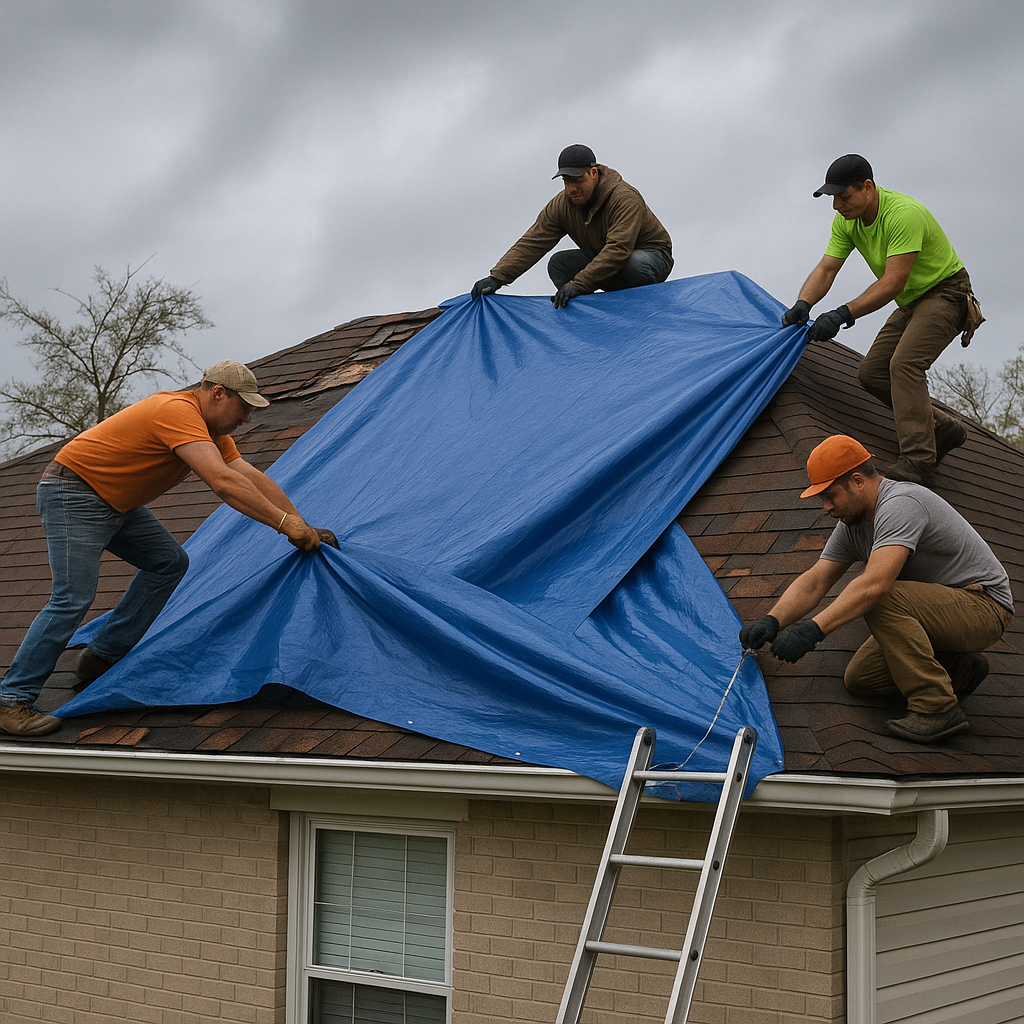
When severe weather strikes, emergency roof tarping is a critical first step to protect your property from escalating damage and costly repairs.
Understanding the Immediate Risks After Storm Damage
After a major storm, your roof can be compromised by missing shingles, punctures, or structural weaknesses. Immediate risks include water infiltration, which can lead to rapid deterioration of insulation, framing, and ceilings. Unaddressed, these issues can cause mold growth, electrical hazards, and further weakening of your property's envelope. To understand the full impact of storm damage on your home's exterior, learn more about the risks to your roof and siding.
Storm-related roof damage leaves your home or commercial building exposed to wind-driven rain and debris. Each hour without protection increases the likelihood of costly secondary damage to the structure and interior finishes. Fast action is critical to minimize both safety risks and future restoration costs. Emergency roof tarping services can provide immediate protection and prevent further damage.
How Emergency Roof Tarping Works to Shield Your Property
Emergency roof tarping is a rapid-response solution designed to temporarily seal and protect damaged roofing systems. High-quality tarps are secured over affected areas to prevent water ingress, block debris, and mitigate further exposure until permanent repairs or replacement can be completed. Learn more about emergency roof tarping services in Southwestern PA to understand how this crucial service can protect your property.
This process involves assessing the extent of the damage, selecting an appropriate tarp with sufficient durability, and anchoring it in accordance with construction best practices. The goal is to provide a weather-resistant barrier that maintains interior dryness, stabilizes temperatures, and prevents escalation of damage during the interim period.
Technical Best Practices for Effective Roof Tarp Installation
Proper tarping requires careful consideration of roof pitch, material compatibility, and structural integrity. Industry best practices include overlapping tarp edges, anchoring with wood strips or cap nails (avoiding further shingle or membrane damage), and ensuring the tarp extends beyond the damaged area for full coverage. For a comprehensive guide on how to protect your roof and siding from future storm damage, consider implementing preventative measures.
It is essential to avoid creating water dams or trapping moisture beneath the tarp. Installers should follow local building codes and manufacturer guidelines for temporary repairs to ensure both safety and insurance compliance. Detailed documentation, including photos of the damage and installation, supports insurance claims and future restoration planning. For guidance on navigating the insurance claim process for storm damage repairs, consult our comprehensive guide.
The Benefits of Professional Tarping Versus DIY Solutions
While DIY tarping may seem cost-effective, professional tarping ensures the job is done quickly, safely, and in accordance with industry standards. Experienced contractors use commercial-grade materials, advanced installation techniques, and safety equipment to reduce the risk of injury or further property damage. To understand when to tackle DIY roof repairs and when to call the professionals, check out our expert advice.
Professionals also understand how to navigate complex roof geometries, steep pitches, and underlying hazards. Their expertise ensures that the temporary solution is robust, reducing the risk of tarp blow-offs or leaks that can undermine insurance coverage or delay restoration.
Next Steps: Inspection, Restoration, and Long-Term Protection
Once your property is stabilized with emergency tarping, a thorough inspection by a qualified roofing specialist is essential. This assessment determines whether your roof can be repaired or requires full replacement, factoring in age, extent of storm damage, and code compliance requirements. Learn how to tell if you need a new roof before it starts leaking to stay ahead of potential issues.
Following inspection, restoration or replacement is planned, with a focus on selecting durable, energy-efficient materials that enhance long-term protection. Consider additional upgrades such as impact-resistant shingles, advanced underlayment, or roof coatings to fortify your property against future storms. For tips on maximizing your investment in roof replacement, check out our comprehensive guide.
How can Bella Construction's Emergency Tarping help you.
Bella Construction & Development Inc. provides rapid-response emergency roof tarping services throughout Western Pennsylvania. Our skilled team uses commercial-grade tarps and industry-approved installation methods to secure your property and prevent further loss. Find out why Bella Construction is the local roofing contractor you can trust for all your roofing needs.
With over 30 years of experience, we offer comprehensive exterior restoration, from damage assessment and insurance claim guidance to full repair or roof replacement. Bella's local presence, flexible financing options, and commitment to quality craftsmanship ensure your property is protected and your peace of mind is restored. Learn how Bella Construction helps with insurance claims for roof repairs to make the process smoother for you.