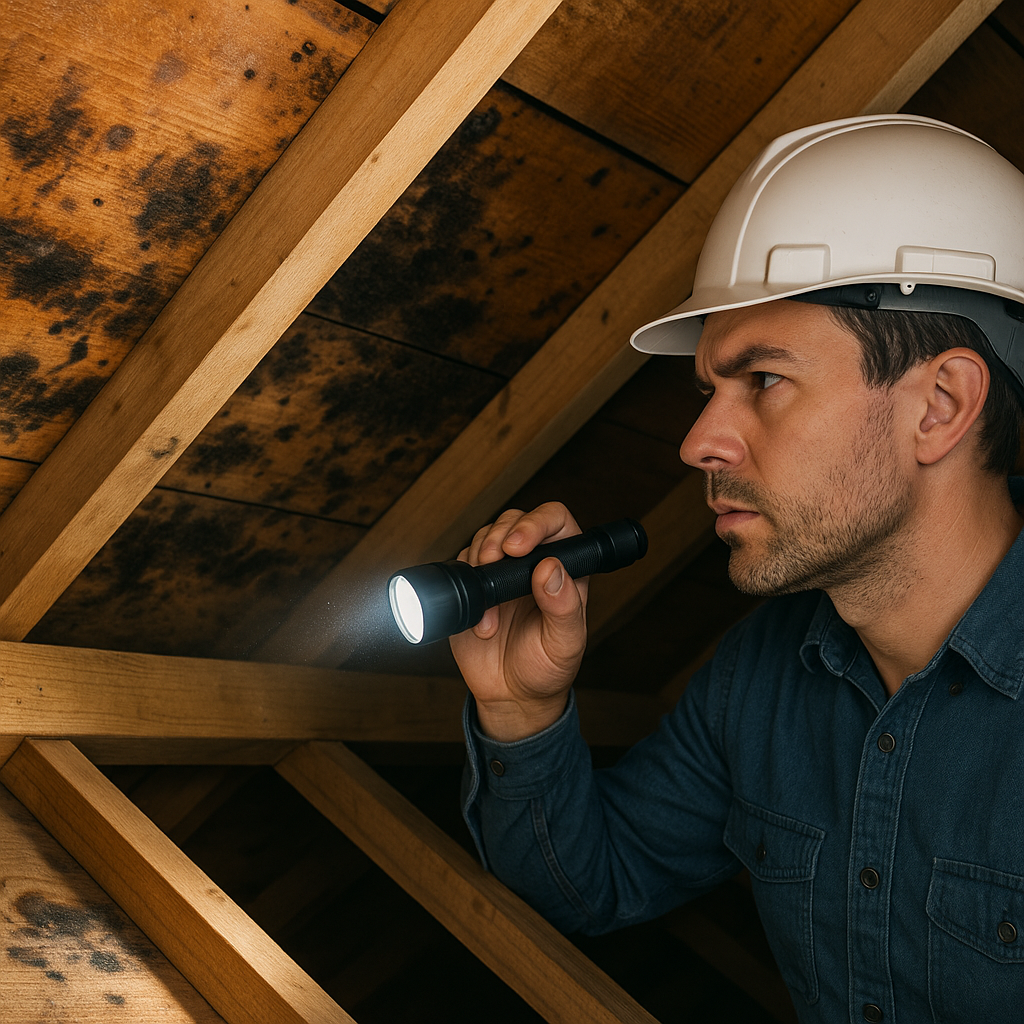
Discovering mold in your attic can be alarming, but it doesn't automatically mean you need to replace your entire roof—understanding the root cause is the key to making the right repair decision.
What Actually Causes Mold Growth In Your Attic
Mold growth in your attic is primarily the result of excess moisture combined with inadequate ventilation. When warm, humid air from your living spaces rises into the attic and encounters cooler surfaces, condensation forms on the underside of the roof deck, rafters, and other structural components. This persistent moisture creates the perfect environment for mold spores—which are naturally present in the air—to colonize and spread across wood surfaces, insulation, and other materials. For a comprehensive understanding of why your attic might be wet even if your roof isn't leaking, including the role of condensation, check out our detailed guide.
Several factors can contribute to elevated moisture levels in your attic space. Poor ventilation is one of the most common culprits, preventing proper air circulation that would otherwise allow moisture to escape. Bathroom exhaust fans or dryer vents that terminate in the attic instead of outside can introduce significant amounts of humidity directly into the space. Additionally, inadequate or improperly installed insulation can allow warm air to migrate into the attic, increasing the likelihood of condensation. In some cases, roof leaks from damaged shingles, compromised flashing, or deteriorated underlayment can introduce water directly into the attic, creating localized mold growth. To learn more about the importance of proper attic ventilation and the consequences of ignoring it, read our comprehensive guide.
It's important to understand that while roof damage can certainly cause mold, it's not always the primary factor. Many attic mold issues stem from ventilation and insulation deficiencies rather than structural roof problems. A comprehensive inspection by a licensed professional is essential to accurately identify the moisture source and determine whether your roof system requires attention or if other corrective measures will resolve the issue.
How To Determine If Your Roof Is The Real Problem
Determining whether your roof is the actual source of attic mold requires a systematic inspection process that examines both the interior and exterior components of your roofing system. Start by examining the attic during or immediately after a rainstorm, if safe to do so. Look for active water intrusion, wet spots on the roof deck, or water stains that indicate recent leaks. Pay particular attention to areas around roof penetrations such as chimneys, plumbing vents, and skylights, as well as valleys and eaves where water tends to concentrate. For a comprehensive guide on how to tell if you need a new roof before it starts leaking, including signs of hidden damage, check out our expert tips.
Inspect the condition of your roofing materials from the exterior as well. Look for missing, cracked, or curling shingles that could allow water penetration. Check the flashing around chimneys, vents, and where the roof meets vertical walls for signs of deterioration, separation, or improper installation. Examine the condition of the underlayment at the eaves if visible, as degraded underlayment can compromise your roof's waterproofing integrity even when shingles appear intact. If you're unsure about what to look for, our guide on 5 clear signs your roof needs urgent repair can help you identify critical issues that require immediate attention.
Inside the attic, examine the pattern and location of mold growth carefully. If mold is concentrated near roof penetrations, along ridges, or in specific sections that correspond to visible roof damage, the roof itself may be the culprit. However, if mold appears uniformly distributed across the entire underside of the roof deck or is primarily located on the gable ends away from the roof surface, ventilation and condensation issues are more likely responsible. A professional roofing contractor can perform a comprehensive assessment using moisture meters and thermal imaging to pinpoint water sources and determine whether roof repairs or replacement are necessary to resolve your mold problem. To understand the signs of trapped moisture under shingles that you shouldn't ignore, read our detailed article on this critical issue.
When Ventilation And Insulation Fixes Can Solve Attic Mold
In many cases, attic mold can be effectively remediated without roof replacement by addressing ventilation and insulation deficiencies. Proper attic ventilation follows a balanced system that includes both intake vents at the soffits and exhaust vents at or near the roof ridge. This creates continuous airflow that removes moisture-laden air before condensation can occur. If your attic lacks adequate ventilation or has an imbalanced system, installing additional soffit vents, ridge vents, or gable vents can dramatically improve air circulation and reduce humidity levels.
Insulation improvements also play a critical role in preventing attic mold. Properly installed insulation creates a thermal barrier that prevents warm, moist air from your living spaces from reaching the cold attic environment where condensation occurs. Common insulation-related issues include insufficient R-value for your climate zone, gaps or compression that reduce effectiveness, and improper installation that blocks soffit vents and prevents airflow. Upgrading your insulation to meet current building code standards and ensuring it's installed with proper air sealing can eliminate the conditions that support mold growth.
Before pursuing ventilation and insulation solutions, it's essential to address any moisture sources originating from within your home. Ensure that bathroom exhaust fans vent directly to the exterior rather than into the attic, repair any plumbing leaks, and consider installing a whole-house ventilation system if indoor humidity levels are consistently high. Once these moisture sources are controlled and ventilation and insulation are optimized, existing mold can be professionally remediated, and the conditions that allowed it to develop will no longer exist. A licensed contractor with expertise in building science can assess your specific situation and recommend the most cost-effective approach to resolve your attic mold issues without unnecessary roof replacement. For more information on cost-effective roof repair solutions for homeowners, including addressing ventilation and moisture issues, check out our comprehensive guide.
Signs That Roof Replacement Is Necessary For Mold Issues
While many attic mold situations can be resolved without replacing the roof, certain conditions indicate that roof replacement is the most appropriate solution. If your roof is approaching or has exceeded its expected service life—typically 20 to 30 years for asphalt shingles—and shows signs of widespread deterioration such as extensive granule loss, multiple layers of shingles, or pervasive water damage to the roof deck, replacement becomes the prudent choice. When chronic leaks have compromised the structural integrity of the roof deck, causing rot, delamination, or sagging, repairs may be insufficient to provide long-term protection. To help you make an informed decision, our guide on knowing when to replace your roof provides valuable insights into the factors that indicate it's time for a full replacement.
Extensive mold growth directly on the underside of the roof deck accompanied by visible water stains, active leaking, and damaged shingles often indicates that the roofing system has failed in multiple areas. In these situations, addressing individual leaks through spot repairs may provide only temporary relief, as other compromised areas will likely develop problems in the near future. A comprehensive roof replacement allows for a complete assessment of the roof deck condition, replacement of any deteriorated sheathing, installation of a new high-performance underlayment, and application of modern roofing materials that meet current building code standards for weather protection and energy efficiency.
Additionally, if your current roofing system lacks essential components such as proper underlayment, ice and water shield in vulnerable areas, or adequate ventilation integrated into the roof design, replacement provides an opportunity to install these critical elements correctly. Modern roofing systems incorporate advanced materials and installation techniques that provide superior protection against water intrusion and ice damming—common causes of attic moisture and mold. A licensed roofing contractor can evaluate whether the extent of damage, age of your roof, and overall system deficiencies warrant replacement rather than repair, helping you make an informed decision that protects your home investment for decades to come.
Working With A Licensed Contractor To Assess Your Options
Engaging a licensed, experienced roofing contractor is essential for accurately diagnosing the cause of attic mold and determining the most effective and cost-efficient solution. A qualified professional brings specialized knowledge of building science, roofing systems, ventilation requirements, and moisture management that allows them to identify issues that may not be obvious to homeowners. During a comprehensive inspection, a reputable contractor will examine your entire roofing system, assess attic ventilation and insulation, check for active leaks, and use diagnostic tools such as moisture meters to pinpoint problem areas. To understand what to expect during a storm damage inspection of your roof, which can also reveal underlying issues contributing to mold growth, read our detailed guide.
When evaluating contractors, look for companies with substantial experience in residential roofing, proper licensing and insurance, and a proven track record of quality workmanship. Request detailed written estimates that clearly outline the scope of work, materials specifications, project timeline, and warranty coverage. A trustworthy contractor will explain their findings in clear terms, present you with multiple options when appropriate, and help you understand the advantages and cost implications of each approach. They should never pressure you into unnecessary work but instead provide honest recommendations based on the actual condition of your roofing system and the specific causes of your mold issue. For guidance on choosing a roofing contractor and essential questions to ask, check out our comprehensive article to ensure you make an informed decision.
At Bella Construction & Development Inc., we bring over 30 years of experience helping Western Pennsylvania homeowners address roofing and attic moisture concerns. Our licensed professionals conduct thorough inspections to determine whether roof repairs, ventilation improvements, or complete roof replacement is the right solution for your situation. We offer free estimates and work with you to develop a plan that protects your home while respecting your budget. Whether your attic mold stems from a failing roof or inadequate ventilation, we provide the expertise and end-to-end project management to resolve the issue correctly the first time, backed by our 100% satisfaction guarantee and partnerships with trusted manufacturers like Owens Corning. Contact us today to schedule your no-obligation inspection and take the first step toward a healthier, mold-free attic. To learn more about why Bella Construction is the local roofing contractor you can trust, visit our website for detailed information on our services and commitment to quality.