
Discovering moisture in your attic without an obvious roof leak can be alarming, but understanding the difference between condensation and structural damage is the first step to protecting your home's integrity and energy efficiency.
The Science Behind Attic Moisture: Why Condensation Forms Without a Leak
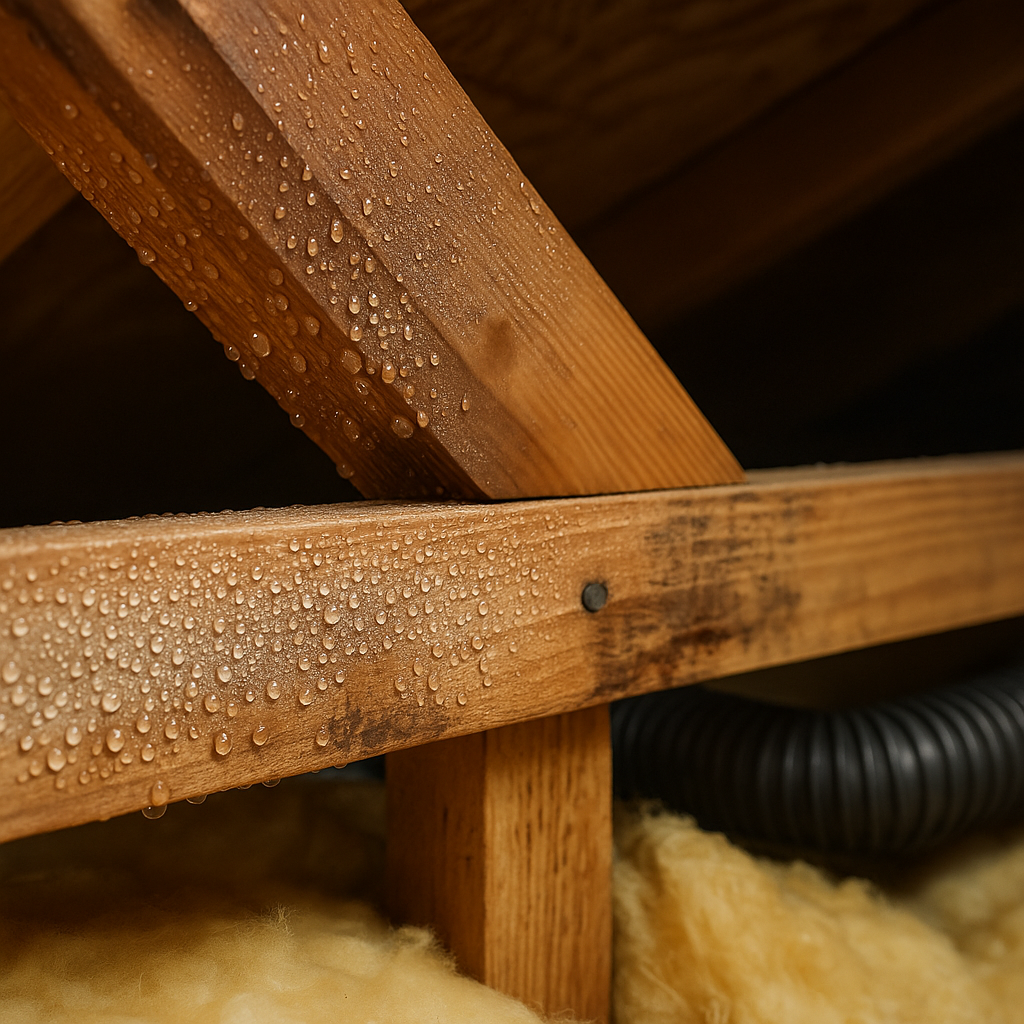
Homeowners in Western Pennsylvania often climb into their attic space and discover wet insulation, water droplets on rafters, or damp wood surfaces—yet their roof shows no signs of leaking. This puzzling situation is frequently caused by condensation, a natural process that occurs when warm, moist air meets cold surfaces. During Pittsburgh's cold winters, the temperature differential between your heated living space and the cold attic creates the perfect conditions for moisture accumulation.
When warm air from your home rises into the attic—through gaps around light fixtures, plumbing penetrations, or attic access points—it carries water vapor with it. As this moisture-laden air encounters the cold underside of your roof decking or cold metal surfaces like nail tips, it cools rapidly. Cold air cannot hold as much moisture as warm air, so the excess water vapor condenses into liquid droplets, much like water beads forming on the outside of a cold glass on a humid day. This process is a key part of why attic ventilation matters in maintaining a healthy roof system.
Understanding this process is crucial because it means that even a structurally sound roof with no leaks can still develop significant moisture problems. The source of the water isn't coming from outside your home through damaged shingles or flashing—it's being generated inside your home and transported into the attic through air leakage. This distinction is essential for determining the right solution and protecting your home's long-term integrity.
Identifying the Signs: Condensation Problems Versus Roof Damage
Distinguishing between condensation and actual roof damage requires careful observation and knowledge of the telltale signs of each condition. Condensation typically presents as widespread moisture across multiple surfaces, including frost or water droplets on nail tips protruding through the roof decking, dampness along the entire underside of the roof sheathing, and wet or compressed insulation throughout the attic space. You may also notice mold or mildew growth on wood surfaces, a musty odor, and moisture that appears most heavily during or immediately after cold weather periods.
In contrast, roof leaks from structural damage typically show more localized patterns. Look for water stains or discoloration in specific areas directly below potential entry points, drip marks or water trails running down rafters or along the roof deck, concentrated dampness near chimneys, skylights, or ventilation penetrations, and evidence of missing or damaged shingles visible from inside or outside. Roof damage often worsens during rain or snow events, while condensation problems are more closely tied to temperature differentials and indoor humidity levels regardless of precipitation.
If you're uncertain about the source of attic moisture, it's advisable to consult with experienced roofing professionals who can conduct a thorough inspection. At Bella Construction & Development, our licensed professionals bring over 30 years of experience diagnosing moisture issues in Pittsburgh-area homes. We examine ventilation systems, insulation quality, roof integrity, and air sealing to provide accurate assessments that lead to effective, long-lasting solutions.
Common Causes of Attic Condensation in Western Pennsylvania Homes
Western Pennsylvania's climate—characterized by cold, snowy winters and humid summers—creates unique challenges for attic moisture control. Several common factors contribute to condensation problems in our region. Inadequate attic ventilation ranks among the most frequent culprits, as many older homes lack sufficient soffit and ridge vents to establish proper airflow. Without adequate ventilation, moist air becomes trapped in the attic space with nowhere to escape, leading to persistent condensation on cold surfaces.
Air leakage from the living space below represents another major contributor. Gaps around recessed lighting fixtures, bathroom exhaust fans that vent into the attic rather than outside, unsealed attic hatches or pull-down stairs, and penetrations for plumbing stacks, electrical wiring, or HVAC ducts all provide pathways for warm, humid air to enter the attic. Even small openings can transfer substantial amounts of moisture over time, particularly during heating season when the pressure differential drives indoor air upward. These issues can lead to significant problems if left unaddressed.
Insufficient or improperly installed insulation compounds these problems by failing to maintain a proper thermal barrier between conditioned and unconditioned spaces. When insulation is compressed, missing, or installed without proper air sealing beneath it, heat loss increases and cold spots develop where condensation readily forms. Additionally, high indoor humidity levels—often elevated by cooking, showering, humidifiers, or inadequate whole-house ventilation—provide the moisture that eventually finds its way into attic spaces. Our expertise with both roofing systems and comprehensive exterior services allows us to identify all contributing factors and address them systematically for optimal moisture control.
The Role of Proper Ventilation and Insulation in Moisture Control
Effective moisture management in your attic depends on the coordinated performance of three critical building science principles: proper ventilation, adequate insulation, and comprehensive air sealing. Ventilation serves to remove moisture-laden air from the attic space before condensation can occur. A balanced ventilation system incorporates intake vents at the soffits and exhaust vents at the ridge or gable ends, creating continuous airflow that carries humid air out of the attic. For optimal performance, building codes typically recommend one square foot of net free ventilation area for every 150 square feet of attic floor space when a vapor retarder is present.
Insulation establishes the thermal boundary that keeps your living space warm while maintaining attic temperatures closer to outdoor conditions. Properly installed insulation should achieve the recommended R-value for our climate zone—typically R-49 to R-60 in Western Pennsylvania attics—and should be installed uniformly without gaps or compression. However, insulation alone cannot prevent moisture problems. The most critical yet often overlooked component is air sealing, which prevents warm, moist air from entering the attic in the first place. Proper attic ventilation and insulation work together to maintain a healthy roof system.
Air sealing involves identifying and closing all penetrations and gaps in the attic floor using appropriate materials such as spray foam, caulk, or rigid blocking. This includes sealing around chimneys with appropriate fire-resistant materials, covering recessed lights with airtight housings, sealing electrical and plumbing penetrations, weatherstripping attic access doors, and ensuring that bathroom and kitchen exhaust fans vent directly to the exterior rather than into the attic. When these three elements—ventilation, insulation, and air sealing—work together properly, moisture problems diminish significantly, energy efficiency improves, and the structural integrity of your roof system is protected for years to come.