
Winter weather can silently compromise your roof's integrity—catching early warning signs now can save you thousands in costly repairs and protect your home from severe water damage.
Understanding How Winter Weather Attacks Your Roof
Winter weather in Western Pennsylvania presents unique challenges for residential roofing systems. The freeze-thaw cycles common in the Pittsburgh region create conditions where water penetrates small cracks and crevices, then expands upon freezing—causing progressive damage that compounds with each temperature fluctuation. Snow accumulation adds significant weight stress to roof structures, while high winds can lift shingles and compromise the protective envelope of your home. For a comprehensive guide on how to prevent ice dams on your roof, check out our expert tips.
The most vulnerable component during winter months is often your asphalt shingles, which rely on protective granules to shield the underlying asphalt layer from UV radiation and physical damage. Winter conditions accelerate granule loss through thermal contraction and expansion, ice formation beneath shingle edges, and mechanical stress from ice dams. When granules are lost in significant quantities, the asphalt becomes exposed to moisture infiltration and accelerated deterioration. Learn more about the signs of trapped moisture under shingles you shouldn't ignore to protect your roof's integrity.
Temperature extremes are particularly harsh on roofing materials. When temperatures drop below freezing, shingles become brittle and more susceptible to cracking or breaking. Conversely, brief warming periods can cause rapid ice melt that overwhelms drainage systems, leading to standing water—a condition that no roofing system is designed to handle long-term. Understanding these winter attack mechanisms helps homeowners recognize why post-winter inspections are critical to maintaining the integrity and longevity of their roofing investment.
Critical Warning Signs of Winter Roof Damage Every Homeowner Should Know
Excessive granule loss represents one of the most significant indicators that your asphalt shingles have suffered winter damage. After winter storms, inspect your gutters and downspouts for unusual accumulations of granules—these appear as dark, coarse sand-like particles. While some granule loss is normal over a roof's lifespan, significant deposits following winter weather indicate accelerated deterioration. Shingles that have lost too many granules appear lighter in color or show visible black asphalt backing, signaling compromised protection and the need for professional assessment. For more information on how to check if your roof needs repairs, consult our comprehensive guide.
Missing, cracked, or curling shingles are clear visual indicators of winter damage. Walk around your property and examine your roofline from ground level, looking for shingles that appear lifted, displaced, or absent altogether. Curling edges or corners suggest that moisture has penetrated beneath the shingles, causing the decking or underlayment to swell. Cracked shingles indicate brittleness from freeze-thaw cycles and represent potential leak points during spring rains. If you notice these issues, it's crucial to act quickly. Learn why Pittsburgh homeowners should act fast when they have missing shingles to prevent further damage.
Interior warning signs often reveal roof damage before exterior symptoms become obvious. Check your attic for water stains on rafters or decking, which appear as dark streaks or discoloration. Inspect ceilings throughout your home for water spots, sagging areas, or peeling paint—all indicators of moisture intrusion. Increased energy bills during winter months may also signal compromised insulation due to roof damage allowing warm air to escape. Musty odors in upper-level rooms or attic spaces suggest ongoing moisture problems that require immediate attention. For a comprehensive understanding of these issues, read our article on why your attic might be wet even if your roof isn't leaking.
Damaged or compromised flashing around chimneys, vents, skylights, and roof valleys represents another critical warning sign. Flashing serves as the waterproofing seal at roof penetrations and transitions, and winter conditions can cause these metal components to separate, corrode, or develop gaps. Visual inspection may reveal lifted flashing edges, rust stains, or visible gaps where flashing meets roofing materials or vertical surfaces—all indicating vulnerability to water intrusion. To learn more about these issues, check out our guide on common flashing problems and how to address them.
Ice Dams and Moisture Intrusion: The Hidden Threats
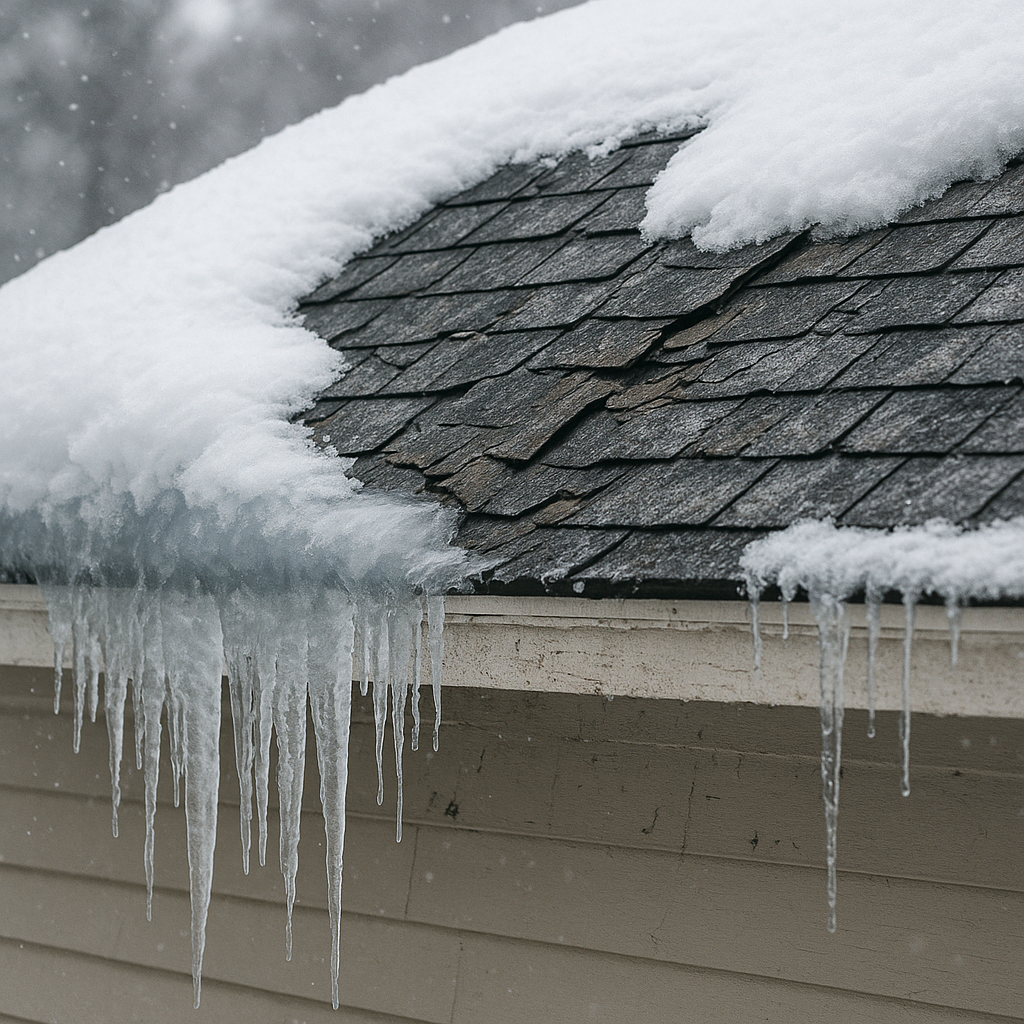
Ice dams form when heat escaping through your roof melts snow at the peak, causing water to flow down to the colder eaves where it refreezes. This creates a dam of ice along the roof edge that prevents proper drainage, forcing water to back up under shingles where it can penetrate the roof deck, insulation, and eventually interior ceilings. Ice dams are particularly problematic in Pittsburgh's climate, where temperature fluctuations create ideal conditions for their formation. The resulting moisture intrusion often goes undetected until significant damage has occurred. For effective strategies to combat this issue, read our article on how to prevent ice damming and protect your roof this winter.
The consequences of ice dam damage extend beyond immediate leaks. Water that infiltrates beneath shingles saturates the underlying roof deck and insulation, compromising structural integrity and creating conditions favorable for mold and mildew growth. Prolonged moisture exposure causes wood rot in roof decking, rafters, and fascia boards—damage that requires extensive repairs and threatens the overall stability of your roofing system. The weight of ice dams themselves can also damage gutters, pull fascia boards away from the roof structure, and cause shingles to lift or tear.
Moisture intrusion creates a cascade of problems that worsen over time if left unaddressed. Wet insulation loses its R-value effectiveness, increasing heating costs and creating uncomfortable temperature variations throughout your home. Moisture trapped in wall cavities and attic spaces promotes mold growth that poses health risks and requires professional remediation. Ceiling stains, peeling paint, and warped drywall represent visible symptoms of moisture damage, but the hidden structural deterioration often proves far more costly to repair.
Prevention and early detection are essential for managing ice dam risks. Adequate attic ventilation and insulation help maintain consistent roof temperatures that prevent snow melt at the peak. After winter storms, look for icicles hanging from roof edges—while picturesque, they often indicate conditions conducive to ice dam formation. If you notice water stains appearing on interior ceilings during or shortly after winter weather, this suggests active ice dam damage requiring immediate professional assessment to prevent further deterioration. For more information on how to protect your roof during winter, read our guide on preparing your roof for snow and ice.
Conducting a Safe and Thorough Roof Inspection After Winter Storms
Safety must be your primary consideration when inspecting for winter roof damage. While ground-level visual inspection provides valuable information, climbing onto a potentially damaged or ice-covered roof presents serious injury risks. Use binoculars to examine your roof from ground level, looking for obvious damage such as missing shingles, displaced flashing, or debris accumulation. Walk the perimeter of your home to observe all roof sections, paying particular attention to valleys, eaves, and areas around chimneys and vents where damage commonly occurs.
Interior inspection provides crucial insights into roof condition without requiring roof access. Begin in your attic on a sunny day—sunlight penetrating through the roof deck indicates holes or gaps requiring immediate attention. Use a flashlight to examine roof decking from below, looking for water stains, dark spots indicating moisture, or sagging areas suggesting structural compromise. Check insulation for wet or compressed sections, which indicate water intrusion. In finished spaces, inspect ceilings and upper walls for stains, discoloration, peeling paint, or soft spots that signal moisture damage.
Document your findings with photographs and detailed notes, including the location, size, and severity of any damage observed. This documentation proves valuable when consulting with roofing professionals and may be required for insurance claims if storm damage is significant. Take photos of granule accumulation in gutters, any visible shingle damage, interior water stains, and areas where ice dams formed. Note the date of inspection and any recent weather events that may have caused the damage. For a comprehensive understanding of the inspection process, read our guide on what to expect during a storm damage inspection of your roof.
Timing your post-winter inspection appropriately ensures accurate assessment while preventing further damage. Conduct your initial inspection as soon as weather safely permits following winter storms, but recognize that some damage may not become apparent until spring thaw reveals hidden issues. Schedule a comprehensive professional inspection in early spring before the rainy season begins, allowing time to complete necessary repairs before conditions worsen. Regular annual inspections help establish baseline conditions that make detecting new damage easier and support proactive maintenance strategies. To learn more about the best timing for your roof projects, check out our article on how to avoid the "spring rush" by scheduling your exterior project in March.
When to Call Professional Roofing Contractors for Assessment and Repairs
Certain warning signs demand immediate professional assessment rather than delayed action. If you observe active leaking during or after winter storms, notice significant granule loss exposing bare asphalt on multiple shingles, or see large sections of missing or damaged shingles, contact a licensed roofing contractor promptly. Interior signs such as sagging ceilings, widespread water stains, or visible daylight through the attic roof deck indicate serious compromise requiring urgent professional evaluation. Ice dam damage that has caused interior water infiltration also warrants immediate contractor involvement to prevent ongoing deterioration. For a comprehensive guide on identifying these critical issues, read our article on 5 clear signs your roof needs urgent repair.
Professional roofing inspections provide comprehensive assessment beyond what homeowners can safely accomplish. Licensed contractors have the training, equipment, and experience to safely access all roof areas, identify subtle damage indicators, and assess the extent of underlying structural issues. At Bella Construction & Development, our inspection process includes detailed examination of shingles, flashing, ventilation systems, roof decking, and drainage components. We document all findings with photographic evidence and provide transparent recommendations prioritized by urgency and potential impact on your home's protection. Learn more about how storm damage roof inspections help prevent claim denials and protect your investment.
Working with experienced local contractors offers distinct advantages for addressing winter roof damage. Our three decades of experience serving Western Pennsylvania homeowners means we understand the specific challenges Pittsburgh's climate presents for residential roofing systems. We maintain partnerships with premium manufacturers like Owens Corning, ensuring repairs utilize high-quality materials designed for regional weather conditions. Our in-house project management provides coordinated scheduling, clear communication, and accountability from initial assessment through project completion—eliminating the confusion that often accompanies exterior restoration work. To learn more about why local expertise matters, read about why Pittsburgh homeowners choose Bella Construction for roofing services.
The financial aspect of roof repairs concerns most homeowners, but delaying necessary work typically increases total costs significantly. Minor damage addressed promptly often requires limited repairs, while deferred maintenance allows water intrusion to cause extensive structural deterioration requiring complete roof replacement. We offer free estimates that provide detailed cost breakdowns, helping you understand the scope and investment required. Our flexible financing options through trusted financial institutions make essential roof repairs accessible, allowing you to protect your home without compromising your budget. Remember that homeowners insurance may cover storm damage, and we can assist with documentation supporting your claim. For more information on navigating this process, read our guide on how Bella Construction helps with insurance claims for roof repairs.
Selecting a qualified contractor requires verifying credentials and reviewing their track record. Ensure any contractor you consider holds proper licensing and insurance—this protects you from liability and ensures compliance with building codes. Review online ratings and customer testimonials to gauge reliability and quality. Our 4.6-star Google rating and proven portfolio of completed residential projects throughout the Pittsburgh region reflect our commitment to excellent customer service and professional installation. We stand behind our work with a 100% satisfaction guarantee, providing peace of mind that your roofing investment will deliver lasting protection and performance. To learn more about choosing the right roofing professional, check out our guide on roofers in Pittsburgh, Pennsylvania: your trusted partner for quality roofing.